

“A map of the world that does not include Utopia is not worth even glancing at, for it leaves out the one country at which Humanity is always landing. And when Humanity lands there, it looks out, and, seeing a better country, sets sail. Progress is the realization of Utopias.”
~Oscar Wilde~

Research
Broadly, my research centers on investigating the roots of various manifestations of social, political, and economic inequality in contemporary capitalist societies.
I examine how particular conceptions of the human being (ontologically) and its subjectivity, shape and are shaped by political economy.
These are my tools:
Critical Theory – especially theories of economic inequality, class consciousness, racialization and colonial subjectivity.
Marxist Humanism - focusing on the early writings of Marx, which emphasize subjectivity, alienation, human freedom and flourishing.
Comparative Political Philosophy - the juxtaposition of philosophical traditions from different cultures (particularly African, Caribbean, Indigenous American, and European) to identify similarities, differences, and potential integrations.
Aesthetics and Cultural Criticism - an analysis of cultural/aesthetic artifacts, practices and beliefs that shape and are shaped by underlying ideologies, power dynamics, societal norms and values. (particularly punk and other subcultures)
My work develops a sustained line of inquiry into 1) human ontology and subjectivity within the conditions of inequality, 2) expressions of resistance to said conditions (culturally, aesthetically, or politically) and 3) finding the interdisciplinary/scientific grounds for justifying the normative claims of resistance (via. ecology, biological conditions for well-being, and material conditions for flourishing).

Current Projects

(Re)Membering Our Self
This project advances an interdisciplinary rethinking of the concepts of “alienation” and “flourishing”. I draw upon on Marx's philosophical anthropology and the comparatively similar claims made by pre-colonial African and North American Indigenous worldviews, along with scientific justification for these worldviews in contemporary ecological and health sciences. Its normative claim is that a political economy cannot be justified without accountability to human interdependence—materially, socially, ecologically—and that this interdependence lies at the root of human flourishing.
publications

"Carnivalesque Punk as Cultural Revolution"
[Forthcoming] In The Dead Kennedys and Philosophy, ed. Christopher M. Innes.
(McFarland & Company, Jefferson, NC, 2026)

"Editor's Introduction"
Radical Philosophy Review, special issue: "The Point Is to Change It" Vol. 27, No. 1. 2024
ed. Tiffany Montoya, Margaret McLaren, Sarah LaChance Adams, Christopher Davidson.
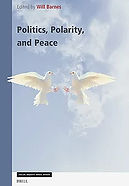
“Hate Speech as Antithetical to Free Speech: The Real Polarity”
In Politics Polarity and Peace, ed. William Barnes.
(Brill: Leiden, Netherlands, 2023)
My chapter intervenes in debates about free speech and political polarization by attempting to parse out the defining features of “hate speech” and the role that inequalities of power often play in contorting this debate.

"Punk Consciousness and Class Consciousness"
In Punk Rock and Philosophy, ed. Josh Heter and Richard Greene.
(Chicago: Open Universe, 2022), 183-192.

Understanding the Legitimacy of Movement:
The Nomadism of Gitanos (Spanish Roma) and Conquistadors
In Essays in Philosophy, special issue: "Migration and Mobility" vol.22, no.1. 2021
While Spain was conquering new lands in the Americas, foreigners arrived into their own – the Gitanos. Spain imposed a double-standard whereby their crossing into new, occupied, territory was legitimate, but the entry of others into Spanish territory was not. I compare and contrast these historically parallel movements of people using Deleuze and Guattari’s taxonomy of movement (what they refer to as nomadology). I conclude that the double-standard of movement was due to differences of power between these two groups, understood in terms of material conditions, a prototypical “racial contract”, and differences in the relationship to land and space. This history and analysis of colonial Spain is a critical start for Latin American postcolonial theory; it gives us a framework to study philosophies of migration and nomadism; and finally, it introduces the Gitanos (and Roma in general) as an important population to complicate critical race theory or theories of ethnicity.

A Review of "Ecological Reflections on Post-Capitalist Society" By Clint Jones (Cornerstone Press: Stevens Point Wisconsin, 2018).
In The North Meridian Review: A Journal of Culture and Scholarship. September 2019.

Recursion and Politics
A Review of "Information Politics: Liberation and Exploitation in the Digital Society" by Tim Jordan
(Pluto Press: London, 2015)
In Contrivers' Review
Ongoing & Future
Research

Bread for Our Bodies, Roses for Our Soul: The Revolution Must Demand Health

“Marxism, Indigenous Philosophy, and Ecological Solidarities: Rethinking Nature as a Worker”

The We that is I: The Philosophical (and Political) Implications of the Microbiome

Necro-Being and Two Types of Death within Capitalism
_edited.jpg)
Afropessimism’s Mistaken Social Ontology: Toward a Materialist Analysis of Anti-Black Racism

The Harm in the Hustle: The Moral Harms of Stress in Late Capitalism

Deterritorializing Paris:
The Situationist International as a 'Nomadic War Machine'

Mujerista Ethics


Emotive Resistance:
From Flamenco to Blues
